

International Women's Day
2025
Let’s accelerate action this International Women's Day
Share this content


At the current rate of progress, it will take until 2158, which is roughly five generations from now, to reach full gender parity, according to data from the World Economic Forum.
This is a concerning statistic and really emphasises the need to take swift and decisive steps to achieve gender equality.
We all have a part to play in this.
For us, equality is embedded in our approach to business, as well as our commitment to colleagues.
In recognition of International Women's Day 2025, we'll be helping to accelerate action by highlighting a recent panel session discussing women in leadership. We'll be drawing on the experiences of women in leadership and offering advice on strategies that can be put in place.
Women are still having to make those difficult choices about work investment vs life investment.
Accelerating action for women in leadership
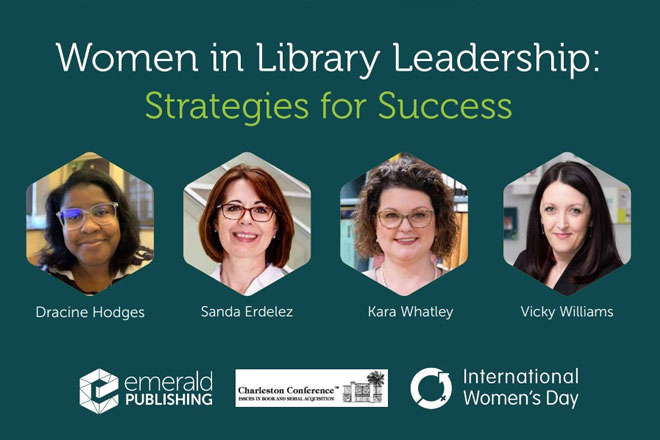
At a recent panel session at the Charleston Conference, USA, Vicky Williams, Emerald’s CEO, facilitated a session, along with a panel of women leaders to discuss Women in library leadership: strategies for success.
Listen in below to Kara Whatley, Dracine Hodges and Sanda Erdelez as they share their career journeys, experiences and the importance of continuing the conversation about women in leadership.
Accelerating action through timely research
Publishing research on the topic of gender equality will help show how far we’ve come, how far we have to go but also what needs to be done to affect change.
Below is a selection of articles doing just this. Each one is either open access or free to access until 31st March 2025.
 Journal of Leadership Education
There are opportunities for us as leaders to think about what behaviours we normalise within our organisations and how we set expectations.


Publish with us
If you are a researcher looking to publish an article, book or case study in this area, take a look at our resources to help you submit, publish and promote your research.
Women bring to the table a different type of emotional intelligence that supports more collaborative leadership.
Accelerating action by adding your voice to important conversations
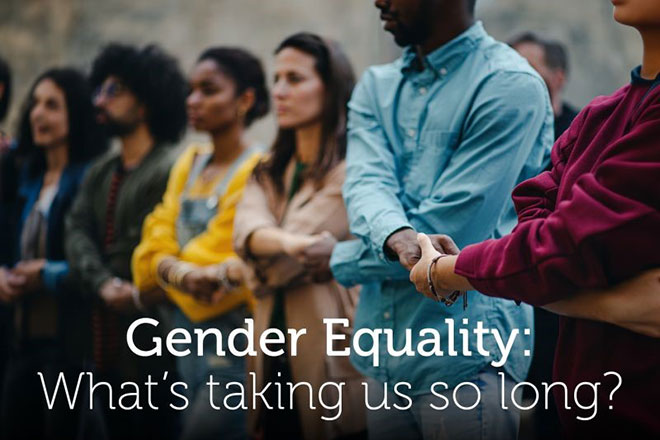
Gender equality: what’s taking us so long?
A recent mission on gender equality, supporting UN Sustainable Development Goal 5, asked the following questions:
- What are the constraints that are holding women back from being able to make an equal contribution in the boardroom and in government?
- How does gender inequality impact society, organisations and us as individuals?
- How can we close the gap? How can responsible management practices help to empower women and girls and achieve true gender equality?
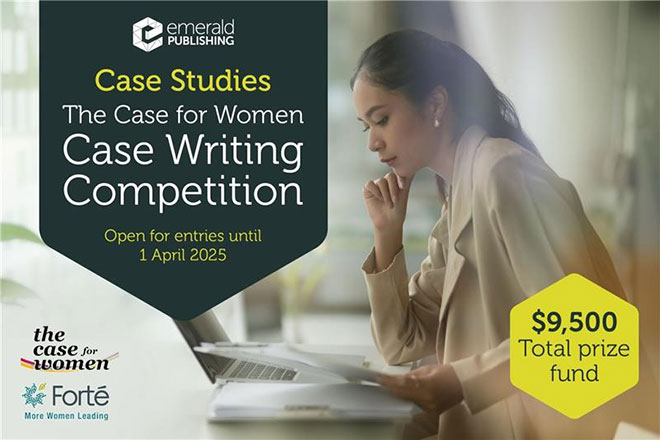
The Case for Women competition
The Case for Women competition was developed to fill significant gender gaps in business school teaching case literature.
Run in partnership with The Case for Women and Forté, it aims to promote the development of high-quality teaching case material that positively represents the challenges and triumphs of real women in leadership positions.
Submissions are currently open until 1 April 2025.

Accelerating action by being a responsible publisher
From our CEO to our newest recruits, we all understand the importance of diversity. We know we still have a lot of work to do but recognise our responsibility to help make publishing more inclusive and equally representative.
This includes ensuring our work with our Emerald Goal Advisors, editorial boards, authorship, and case studies reflect the diversity of the communities they serve.
Here’s a snapshot of just some of the things we’ve actioned recently:
By introducing department specific positive action to address under or over representation of marginalised genders, we’ve seen women in our technology teams increase to 27% in 2024 from 18% in 2023.
We’ve partnered with Edinburgh Napier University, UK, to increase males in publishing teams through work experience and targeted recruitment for entry level roles.
We're committed to ensuring diversity in our senior leadership. During 2024, 68% of internal promotions were women and other marginalised genders.
We work from anywhere, with full flexibility, and no core hours to ensure all roles are accessible. This is why we’ve been accredited by Flexa for three years in a row, achieving a score of 86%, for our flexible policies and working practices.
We work hard to ensure that our organisational actions reflect the ambitions we have for the research our authors publish with us.


Share this content