

Welcome Interview: Dr SHAO Xun, Toyohashi University of Technology, Japan
International Journal of Pervasive Computing and Communications
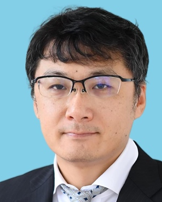
Dr SHAO will begin his term as Editor of International Journal of Pervasive Computing and Communications on 1 January 2026. We asked him to about his background, research interests and goals for the journal.
Q1: Can you tell us a bit about your academic and professional background?
A: I received my PhD in Information Science from Osaka University, Japan. Afterwards I worked as a Researcher at the National Institute of Information and Communications Technology (NICT) and later as Assistant Professor at Kitami Institute of Technology. I am currently an Associate Professor at Toyohashi University of Technology.
My research interests span edge computing, distributed AI, network optimisation, and pervasive sensing systems, aiming to build intelligent infrastructures that integrate communication, computation, and context awareness. I also teach communication systems, embedded systems and applied mathematics, guiding students who seek to connect AI with real-world sensing and networking.
Q2: What attracted you to the role of Editor for IJPCC?
A: I have long admired IJPCC’s mission to bridge computing and communication technologies in support of pervasive and intelligent systems. The journal offers a valuable platform for multidisciplinary research in IoT, ubiquitous computing and context-aware systems—areas closely aligned with my own work.
I was drawn by the opportunity to shape the journal’s strategic direction, enhance its international visibility, and strengthen its community of authors and reviewers. For me, editing is not only about managing papers but about connecting people and ideas across disciplines to create broader impact.
Q3: What is your vision for the journal in the coming years?
A: My vision is to raise IJPCC’s global impact and scholarly quality by focusing on three priorities:
1) Enhancing quality and influence – attracting innovative, high-impact submissions and improving visibility through citations and indexing.
2) Launching strategic special issues – featuring emerging themes such as smart cities, edge intelligence, sustainable sensing and human–AI collaboration.
3) Strengthening the editorial process – expanding the international board, diversifying expertise, and ensuring a fair and efficient peer-review system.
Through these efforts I hope IJPCC will be recognised as a leading open forum for research on pervasive, context-aware and intelligent computing.
Q4: Are there any particular topics or trends in the field that you are excited to see more of in the journal?
A: Yes, I would like to see more contributions in several fast-growing areas:
1) Edge AI and federated learning for sensing – enabling efficient intelligence at the network edge under limited resources.
2) Collaborative and autonomous sensing – systems in which distributed sensors reason and cooperate dynamically.
3) Sustainable and low-power sensing – energy-efficient designs that support environmental and social sustainability.
IJPCC will continue to spotlight such themes through dedicated special issues and invited papers.
Q5: What advice would you give to authors who are considering submitting to IJPCC?
A: Please ensure a clear connection with the journal’s scope and articulate how your work contributes to pervasive computing or communication-enabled intelligence. We particularly value:
1) Rigorous methodology and reproducible evaluation.
2) Meaningful comparison with existing work, highlighting both strengths and limitations.
3) Clarity and accessibility – well-structured writing and clear figures help reach a broader readership.
If you are uncertain about fit, you are always welcome to contact the editorial office before submission.
Q6: How do you see the role of academic publishing evolving, and how will IJPCC support its community?
A: Academic publishing is rapidly evolving towards open science, transparency and collaboration. Data sharing, reproducibility, and rapid publication cycles are now central expectations.
IJPCC aims to embrace these developments by:
1) Encouraging authors to share datasets and source code.
2) Streamlining peer review and improving transparency.
3) Offering early-access options for timely research.
Our goal is to make IJPCC a community-driven, open and trusted venue that advances the fields of pervasive computing and communication.
Q7: What do you enjoy doing outside of your academic work?
A: Outside of academia, I enjoy exploring nature, photography and travelling. Walking in quiet landscapes often inspires new ideas. I also read widely—literature, history and philosophy—which helps broaden my perspective beyond technology.
These activities remind me that creativity often emerges from connecting different worlds—just as pervasive computing connects the digital and physical realms.
_______________________________________
Thank you for sharing your insights and aspirations. The Emerald Publishing team look forward to partnering with you to grow IJPCC!