

Meet the 2024 ICE Award winners for Géotechnique - Geotechnical Research Medal
We are delighted to feature an interview with the winners of the 2024 Geotechnical Research Medal! In this brief conversation, the authors share insights into their award-winning work, the motivation behind it, and their experience publishing with ICE Publishing/Emerald.
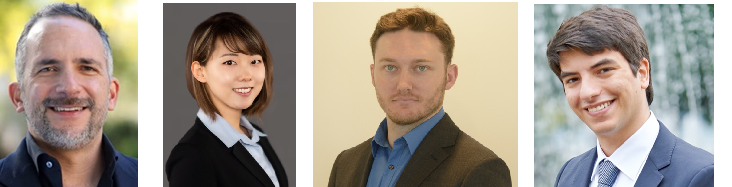
L-r: Professor José E. Andrade, Dr. Dawa Seo, Dr. John Harmon, Professor Giuseppe Buscarnera
Question 1: Congratulations on your recent award. You are the recipients of 2024 Geotechnical Research Medal for article ‘Insight into contact forces in crushable sand using experiments and predictive particle-scale modelling’. Could you briefly introduce yourself and your background for our readers?
Answer: The team who conducted this study consists of two groups with complementary expertise in the domain of granular geomechanics, which spans computational, experimental and theoretical methods. It involved two institutions, the California Institute of Technology and Northwestern University, both in the USA. Both teams are established contributors in the broad area of geomechanics and its diverse applications to geotechnical engineering and subsurface technologies.
Question 2: What inspired the research behind your award-winning paper, and what key question were you aiming to answer?
Answer: Progress in computational modeling during the last few decades has led to enormous advances in computational capabilities. Similar advances have characterized the recent improvement of how we characterize geomaterials across length scales, thanks to techniques such as x-ray microtomography and digital imaging. The synergy between these two domains remains a challenge, which hinges on how well the community can harness such capabilities, information and resources to build digital twins with the appropriate level of accuracy for applications. This work is entrenched in this broader theme, with a specific goal: explaining the underlying mechanics of the collective crushing of sand grains.
Our effort was not only aimed at demonstrating that nowadays it is possible to construct a digital twin of a crushable sands by replicating with high accuracy the simultaneous evolution of macroscopic stress, particle size distribution,and microscale features, such as grain size, shape, and arrangement. It was also meant to resolve quantities and processes that are not yet easily accessible without advanced computer models, such as interparticle forces. Our study aimed at explaining how the diverse set of interactions stemming from the distributed rupture of sand grains influences upper scale phenomena that often control processes such as penetration-based ground testing and deep foundation installation.
Question 3: Were there any unexpected challenges or discoveries during your research process?
Answer: This work involved harmonizing high resolution scans from x-ray synchrotron tomography with an existing computational platform. Optimizing this connection of digitalized reality into a computer model was not trivial and involved substantial research to define the optimal levels of particle discretization and virtual specimen preparation. Computationally, stability reduces, and memory requirements increase with breakage, requiring proper care to handle appropriately. Another challenge was establishing the breakage criteria and breakage shape. An exciting outcome was that our findings showed that, by constraining the model parameters to statistical measurements of individual particle strength, excellent agreement at macroscopic levels could be achieved with minimal additional effort.
In addition, and most notably, while the level set splitting method allows for any complex breakage pattern, the relatively simple breakage plane used achieved remarkable results. This highly encouraging validation showed us that injecting more realism into the model formulation (i.e., not only high-fidelity replicas of the initial particle geometry, but also of their underlying mechanics) leads to a chain of benefits in a variety of metrics relevant for engineering applications.
Question 4: How do you envision your findings influencing future research or real-world applications?
Answer: The domain of granular geomechanics is vast and many questions remain open. Nevertheless, we believe that our work is an encouraging step to bridge new characterization technologies with actionable, quantitative computer models. Future efforts can be directed towards identifying the optimal balance between accuracy and computational costs, to enable a gradual transition from laboratory-scale to field-scale applications. In the latter camp, multi-scale geomechanics is increasingly becoming an essential asset for the geotechnical community to contribute to fringe, but strategic, domains where historical data and prior experience is scarce, such as automated subsurface exploration and underground construction in remote settings, both examples of applications where the predictive power of computational models and the ability to extrapolate without loss of confidence are essential.
Question 5: What motivated you to choose ICE Publishing/Emerald and Géotechnique as the platform for sharing your research?
Answer: For its long-standing reputation in our field, Géotechnique holds a special place for anyone who wishes to contribute to the advancement of soil mechanics, especially for studies that aim to bridge exciting emerging trends in subsurface engineering with advances in cross-disciplinary science domains that put the mechanics of the ground at their center. These factors played a key role in choosing Géotechnique as our preferred venue for this study.
Question 6: What are the next steps in your research? Are there any emerging areas or interdisciplinary connections you are excited to explore?
Answer: This work has been a steppingstone that led to a number of different research directions. Some have been conducted jointly by the whole team of this study, while others have been conducted independently either at Caltech or at Northwestern. Examples are studies that aimed to define the optimal level of particle resolution that preserves model accuracy, while allowing computational cost savings, as well as others that aim to explain how the shape of breakable particulate systems evolves in diverse settings, spanning from seismically active faults, to asteroid impact sites, or even systems of ice floats in arctic environments.
Question 7: What advice would you give to early-career researchers or students hoping to make a meaningful impact in academia?
Answer: That it is important to nurture your passion by finding inspiration in the seminal studies at the core of your discipline. At the same time, it is essential to always think forward, not only with the aim of answering questions that are still open and solving problems that do not yet have solutions, but also of finding questions that no one has asked before and challenges that no one has tackled yet.
Thank you for sharing your insights, and congratulations once again on this well-deserved recognition!
Insight into contact forces in crushable sand using experiments and predictive particle-scale modelling is published in Volume 74, Issue 3 (March 2024) of Géotechnique, and will be free to read for a year.
For more awards on related engineering subjects, please visit ICE Publishing Awards.