

A degrowth perspective on the question of ‘should billionaires exist’?
19th September 2025
Share this content


Author: Carla Liuzzo, Queensland University of Technology, Australia
The question ‘Should billionaires exist?’ invites a lively debate, but especially so when viewed through the lens of degrowth which is highly critical of the prevailing growth-dependent economic models that allow billionaires to flourish. Degrowth advocates for the redistribution of wealth to meet ecological sustainability and social equity challenges. Here, I explore the question of billionaires from multiple angles informed by degrowth scholarship.
1. The Moral Value of Billionaires
Billionaires today predominantly represent the apex of unfettered capitalism, wielding immense socio-economic power that often fails to translate into broader societal benefits. Globally, stark wealth disparity raises fundamental ethical questions:
- Is it justifiable that a tiny minority amasses fortunes beyond billions while millions struggle with increasing poverty?
- What value do billionaires genuinely add to society beyond their personal enrichment?
The latest Forbes Real-Time Billionaires [1] list shows approximately 3,028 billionaires worldwide. The United States leads with around 902 billionaires, followed by China (450) and India (205). These individuals form part of the notorious 1% club [2] - the wealthiest segment whose net worth far exceeds any reasonable threshold of affluence.
Contrary to popular stereotypes focusing on Russian oligarchs (around 140 billionaires are in Russia), the billionaire demographic is largely defined by patriarchal dominance and the rise of ‘tech bros’. The tech sector's billionaires are collectively the wealthiest of all industries. Remarkably, only 13% (approx. 400) of all billionaires worldwide are female, underscoring persistent gender imbalances. This paints a picture of predominantly male entrepreneurs accumulating vast fortunes through technology startups, software innovation, and data-driven platforms. Yanis Varoufakis describes it as Technofeudalism [3], highlighting how digital monopolies run by these ‘tech bros’, perpetuate new forms of economic and political control by exploiting everyday humans as their data serfs.
2. What Purpose Do Billionaires Serve?
Practically speaking, what role do billionaires play in society? Two common arguments in favour of allowing billionaires include:
- Motivation: Some claim billionaires inspire others to pursue success.
- Philanthropy: Billions are sometimes channelled into philanthropic endeavours, such as the Bill & Melinda Gates Foundation [4] or Australia’s Mindaroo Foundation [5].
While there are many examples of billionaires ‘giving back’ to society through charitable and philanthropic endeavors and some fill gaps left by inadequate government services. Indeed, there is evidence that private philanthropy can mitigate social issues where governments fail [6].
But research also reveals a less flattering reality: members of the 2023 Forbes 400 [7] have collectively donated just over $250 billion – that’s less than 6% of their combined net worth! Most billionaires simply fail on philanthropic generosity, giving less than 5% of their fortune. Add to this that their charitable acts often serve dual purposes: altruism intertwined with social recognition, legacy-building, preferential tax treatment, and reputational capital enhancing their business interests, and the true picture of a billionaire emerges.
3. The Systemic Roots: Why Do Billionaires Exist?
Degrowth critiques propose that billionaire wealth is not an accident, but a systemic feature embedded within contemporary capitalism, as explained:
- Wealth generates further wealth through compounding effects, leading to growing concentration at the top
- Structural tax system failures allow ultra-rich individuals to enjoy disproportionately low effective tax rates. Some estimate that billionaires are shirking up to $380 billion a year in tax [8].
- Billionaire status owes more to the social environment than individual effort [9] : to quote Blair Fix “to become a billionaire… you need to live in a society that is suitably rich and appropriately unequal.” [10]
These insights undermine the meritocratic myth that anyone can become a billionaire purely through hard work and personal merit. Rather, intergenerational wealth transfer and societal privilege - both enabled by our current form of capitalism - are the decisive factors.
4. The Societal Impact: How Much Is Too Much?
Wealth concentration has exponentially escalated in the recent decade: between 2020 and 2023, the combined net worth of the world’s five richest men more than doubled at a rate three times faster than inflation - while nearly five billion people saw their wealth decline. [11] This shows that the global ‘wealth pie’ is not infinitely expandable and planetary boundaries impose literal limits on economic growth. If growth is constrained by ecological realities, then questions about fair distribution become urgent and this is the domain of degrowth which invites us to ask the tough questions: How much wealth should one individual legitimately hold? And, what constitutes enough?
5. Policy Implications from a Degrowth Perspective
Emerging ideas such as Limitarianism [12], which advocates for capping extreme wealth, and concepts of sufficiency [13] are gaining attention. Recognising planetary boundaries implies moral and practical imperatives to limit excessive accumulation in favour of reducing inequality. This isn’t the first time we’ve been in this position. Historical precedents include:
- Roman laws dating back to 367 BCE proposed wealth redistribution.
- The Long “Share Our Wealth” Plan [14] in 1934 which influenced Roosevelt’s income limits.
- Wage ratios capping CEO pay comparative to that of lowest-paid workers have been around for decades. Ben and Jerry’s [15] were founded on a 5:1 ratio but once taken over by Unilever this was abandoned.
Within degrowth discourse, regulatory measures limiting wealth accumulation are seen as essential for transitioning towards ecologically sustainable and socially just societies. Failure to address wealth imbalances risks social upheaval as history attests through episodes like the Bolshevik Revolution, French Revolution, and the Arab Spring. Thomas Piketty [16], alongside Walter Scheidel [17] highlight how violent redistribution has historically been a grim but recurring mechanism to tackle inequality. Scheidel cautions: “I am not advocating war, but repeating old ideas ignores historical lessons. Truly innovative solutions will be necessary for lasting change.”
In Conclusion
The existence of billionaires is not simply a question of individual success but reflects profound systemic inequalities entrenched within our economic and social models. These models are increasingly at odds with ecological limits and social justice imperatives. From a degrowth perspective, curbing extreme wealth accumulation is both an ethical necessity and a practical imperative to foster equitable societies within planetary boundaries. Limiting billionaire power requires collective political will to reform taxation systems, regulate corporate practices, and envision economies centred on sufficiency rather than endless growth. The challenge remains: can we imagine, and enact, a future where prosperity does not depend on such stark wealth disparities as to enable billionaires to flourish at the expense of others? The answer may well determine whether sustainable and fair societies will be able to exist in the coming decades.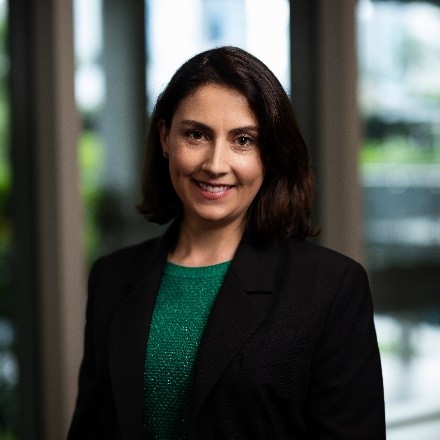
Dr. Carla Liuzzo brings diverse real-world experience in government relations across Australia and the Gulf Arab countries, Carla is dedicated to reshaping business education through innovative teaching and research. Her focus is on integrating degrowth principles into business education to address the pressing sustainability challenges of our time. Carla's current research blends political economy with the scholarship of teaching and learning to develop forward-thinking educational strategies for executive education. As a lecturer, Carla inspires and engages students with authenticity, emphasising the importance of stakeholder engagement, crisis communications, and effective management within governmental contexts. Carla's goal is to empower future business, nonprofit, and governmental leaders to navigate complex challenges while leading sustainably and ethically. Carla is passionate about fostering a collaborative global community where we work collectively to create value and enhance well-being for all.
References
1. https://www.forbes.com/real-time-billionaires/#3511dda33d78
2. https://www.oxfam.org.uk/media/press-releases/worlds-top-1-own-more-wealth-than-95-per-cent-of-humanity/?pscid=ps
3. https://www.theguardian.com/world/2023/sep/24/yanis-varoufakis-technofeudalism-capitalism-ukraine-interview
4. https://www.gatesfoundation.org/
5. https://www.minderoo.org/
6. https://link.springer.com/article/10.1007/s10677-022-10327-3
7. https://www.forbes.com/sites/phoebeliu/2023/10/03/the-forbes-philanthropy-score-2023-how-charitable-are-the-richest-americans/
8. https://www.abc.net.au/news/2024-06-27/tax-billionaires-minimum-tax-2-per-cent-gabriel-zucman-g20/104023796
9. https://economicsfromthetopdown.com/2023/09/03/billionaires-are-so-predictable/
10. https://www.econstor.eu/bitstream/10419/279882/1/Fix-Billionaires-are-so-predictable.pdf
11. https://policy-practice.oxfam.org/resources/inequality-inc-how-corporate-power-divides-our-world-and-the-need-for-a-new-era-621583/
12. https://www.theguardian.com/books/2024/jan/21/limitarianism-the-case-against-extreme-wealth-ingrid-robeyns-extract
13. https://theconversation.com/enough-already-why-humanity-must-get-on-board-with-the-concept-of-sufficiency-235013
14. https://www.hueylong.com/programs/share-our-wealth
15. https://abcnews.go.com/Business/companies-follow-ben-jerrys-lead-wages/story?id=19920634
16. https://www.hup.harvard.edu/books/9780674430006
17. https://blogs.lse.ac.uk/lsereviewofbooks/2018/02/23/book-review-the-great-leveler-violence-and-the-history-of-inequality-from-the-stone-age-to-the-twenty-first-century-by-walter-scheidel/

Fairer society
We are passionate about working with researchers globally to deliver a fairer, more inclusive society. This perhaps has never been more important than in today’s divided world.
Share this content