

Fairness and billionaires: Should billionaires exist?
19th September 2025
Share this content


Author: Brian Chicksen, University of Pretoria, South Africa
It is well recognised that we live in a world plagued with poverty and inequality. The gap between the wealthy and the poor is vast and in certain instances is increasing. At face value, the provocation ‘Should Billionaire Exist?’ is framed in a linear way, calling for a “Yes” or “No” response. In the sustainable development context however, with its ‘wicked’ complexity, linear approaches may be unhelpful. This piece reflects on the issue of billionaires, with its suite of dilemmas, through three lenses:
- A world and society made up of diverse people –the diversity dilemma.
- A society that creates billionaires –the societal values dilemma.
- Becoming and being a billionaire –the individual values dilemma.
1) The Diversity Dilemma
The world has many faces of diversity, including ethnicity, gender, and wealth differentials that may generate opposing intellectual and emotive responses of resentment or celebration. Resentment is likely to be driven by partisan agendas, whereas a sustainable development outlook in pursuit of a shared future for people and planet would tend to value diversity as a source of innovation. The case for valuing diversity is underpinned by increasing the pool of talents and voices around the table for richer perspectives, ideas, and possible solutions. At individual levels, assuming equal opportunity and a meritocracy, there will be differences in the talents of each person, with different pathways to realising their full potential and different extents of potential. This may entail highly talented people becoming billionaires. Casting a blanket ban on billionaires or only allowing select groups to become such, is effectively an argument against diversity. The fundamental question then is not so much are we equally poor or wealthy? Rather, it is how we best develop the conditions for all to realise their full potential and enjoy a meaningful existence.
2) The Societal Values Dilemma
At the heart of a society creating billionaires is a values orientation – valuing individualism at the expense of the collective or valuing individual talents as contributions to the common good. The former values stance may be congruent with an anti-diversity outlook and creates the conditions for a vulnerable society. An example of this is a corporation and shareholder philosophy where the primary motivation is maximisation of profit and shareholder value. This may be explicit or implicit, and if billionaires are created based on such an underlying belief system, the consequences to a shared and collectively prosperous future are dire. On the other hand, a values outlook encouraging individual expression of talents for personal actualisation and the interests of the common good is a hallmark of a resilient society. In this context, the corporation for example sees itself as an agent of society in the interests of society and societal development. Being profitable is a secondary, but necessary objective to ensure its viability and sustainability. These philosophies shape the type of billionaires that are created.
3) The Individual Values Dilemma
At an individual level, owners of wealth – countries, companies, and individuals – play a key role in either exclusive or inclusive societal development. Exclusive societal development may be associated with the appearance of doing good, focusing on the optics of generosity but underpinned by patronising the less fortunate, retaining wealth and masking exclusivity through cosmetic actions. In this case individual success, i.e., becoming a billionaire and being a billionaire, is often at the expense of the common good and cannot support the aspiration of a fairer society. A further challenge of selfish wealth is that it is often never enough and may give rise to other ambitions such as political power for personal gain. Conversely, using wealth to authentically advance inclusive societal development entails intentional use of talents, competencies, wealth, and power for meaningful and enduring existence – across different constituencies and as shaped by the different participants.
Concluding Remarks
In summary, being a billionaire is not bad. However, the type of billionaires our societies create should be anchored on celebrating individual diversity in the interests of the common good; leveraging and rewarding these talents and consequent solutions that are aligned to inclusive societal development and planetary protection; and continuing to use their rewards to further a shared future.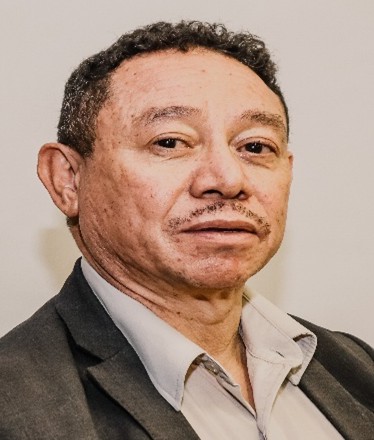
Dr. Brian Chicksen is Advisor to the Executive at the University of Pretoria. Brian has a medical background as a Specialist Physician but his work over the past 20 years has been in the strategy and sustainable development arena. His current role includes being a member of the Sustainable Development Solutions Network, South Africa’s Local Leadership Council and he previously was Vice President: Sustainable Development in AngloGold Ashanti Limited.

Fairer society
We are passionate about working with researchers globally to deliver a fairer, more inclusive society. This perhaps has never been more important than in today’s divided world.
Share this content