

Should billionaires exist?
31st July 2025
Share this content


Author: Professor Wendy M. Purcell PhD FRSA, Rutgers University, USA
What an interesting question for our 2025 mission. And my considered response as Goal Advisor to Emerald’s The Fairer Society is… “Yes”, or perhaps “No”, or then again, “Maybe”! So, I invited some of my lovely friends and colleagues across the globe to think with me – you will see their contributions appearing here over the coming months. We have insights from a current graduate student, an African poet and entrepreneur, and a leading development practitioner to name a few.
At first glance, the very existence of billionaires might seem an anathema to achieving a fairer society, a desired outcome of the Sustainable Development Goals that seek to deliver a world that leaves no one behind . It is morally defensible to accumulate that level of wealth in a world where almost a billion people live in extreme poverty, surviving on less than $2.15 per day , where over two billion people lack safe drinking water , and nearly three billion people face hardship in accessing food with enough nutrients for long-term well-being . Do we expect billionaires to redistribute their wealth to close these gaps? Actually, that’s exactly what some billionaires are doing. Mackenzie Scott, American novelist, philanthropist, and ex-wife of Amazon founder Jeff Bezos donated $15 million to Water For People , a nonprofit working across Latin America, Asia, and Africa to help scale sustainable water and sanitation solutions globally. The Bezos Earth Fund itself donates to tackling the impact of climate change on food systems, such as droughts and flooding, with grants totaling $2.9BN in 2025. The Bill & Melinda Gates Foundation , with its mission “To create a world where every person has the opportunity to live a healthy, productive life” has given $8BN in support with some of that going towards agricultural development to address climate adaptation in farming to support sustainable food supplies. While welcome, is it enough? Large sums indeed, but as a proportion of their wealth – are billionaires doing enough to tackle the growing inequities in our world?
Some see billionaires as simply an outcome of a broken global economic system based on monopolies, tax avoidance, and financialisation. We’ve definitely seen a rise of billionaires alongside deregulation, globalisation, and tech booms. Do we just need smarter policy mechanisms to tackle wealth taxes, inheritance caps, income ratios and so on to limit extreme accumulation and promote fairer distribution? But can a capitalist society really function with capped wealth? In a global context, how does billionaire wealth in the Global North relate to resource extraction, exploitation, and debt in the Global South? As Lawrence Kudakwashe Makaure’s blog notes, Zimbabwe has only one billionaire to 902 in the USA . Forbes has been tracking the number of billionaires for decades, noting they are on the rise with just 140 in 1987 growing to 2,000 just 30-years later and now at 3,000 and worth collectively a staggering $16.1 trillion in total . Given the world’s richest one per cent captured two-thirds of all new wealth ($26 trillion) created globally between 2020 and 2022 – that leaves the remaining 99% of the population to divvy up what’s left ($16 trillion).
Some worry about the outsize influence of billionaires on politics, research, and in other domains. Do billionaires distort democracy through campaign funding, lobbying, and media ownership? Even if their efforts are well-intentioned, are they perhaps also anti-democratic? We know that many billionaires are generous philanthropists, but does this too distort what questions researchers tackle? Are the genuine concerns of global health for instance demoted in favor of funding the medical projects of the ultra-rich? It is absolutely the case that medical research breakthroughs have been enabled through the philanthropic efforts of billionaires investing in science and innovation. But do these advanced and sophisticated treatments for the elderly suffering from lifestyle diseases take precedence over tackling the global burden of disease . Should those dying from poor sanitation, poverty, or simple lack of access to healthcare deserve more attention from our billionaires?
Before we spiral into a world of envy, we ought to complete a thought experiment and consider what a world without billionaires might look like. Would innovation, philanthropy, and economic dynamism stumble? Would the world become even more unfair? Billionaires contribute vast amounts in taxes that support our public services, create decent-paying jobs that enable us to live a fairly good life, and gift some of their enormous wealth to support good causes. The stories of the self-made billionaire can even inspire us to dream and work hard. Would a world where no one has over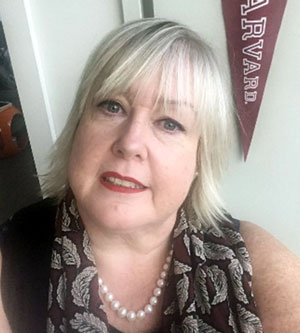 $999 million be any different, would it really be a fairer society? Now, that’s the question of the hour!
Dr. Wendy M. Purcell is Goal Advisor to Emerald Publishing Ltd. on their Fairer Society theme as part of their commitment to the SDGs. She is a full Professor and Vice Chair Education, Rutgers School of Public Health, University President Emerita, leadership coach, mentor, and strategic adviser focusing on transformational change, sustainability, and health. Dr. Purcell is Series Editor of 17-books on ‘Higher Education and the Sustainable Development Goals’ for Emerald Publishing Ltd.
References
- https://sdgs.un.org/goals
- https://unsdg.un.org/2030-agenda/universal-values/leave-no-one-behind
- https://www.worldvision.org/sponsorship-news-stories/global-poverty-facts
- https://www.un.org/sustainabledevelopment/water-and-sanitation/
- https://www.earth.com/news/billions-of-people-cant-afford-healthy-food-despite-not-being-poor/
- https://give.waterforpeople.org/page/50578/donate/1
- https://www.waterforpeople.org/impacting-generations/
- https://www.bezosearthfund.org/
- https://www.gatesfoundation.org/
- https://www.npr.org/2025/04/01/nx-s1-5345950/forbes-billionaires-list
- https://www.forbes.com/billionaires/
- https://www.healthdata.org/research-analysis/gbd

Fairer society
We are passionate about working with researchers globally to deliver a fairer, more inclusive society. This perhaps has never been more important than in today’s divided world.
Share this content