

Should billionaires exist? A reflection on fairness through the lens of the SDGs
19th September 2025
Share this content


Author: Manuel Lira, Founder of IdeaDuctus SC, Mexico
Posing the question “Should billionaires exist?” is not a moral provocation. Rather it represents a gateway into deeper conversations about fairness, sustainability, and the kind of world we aspire to evolve toward. Within the framework of the United Nations Sustainable Development Goals (SDGs)—particularly SDG 10 (Reduced Inequalities), SDG 1 (No Poverty), and SDG 8 (Decent Work and Economic Growth)—the existence of billionaires reflects two sides of the same coin: on one side, a paradox; on the other, a challenge.
The Good: Philanthropy, Innovation, and Economic Dynamism
Billionaires often play outsized roles in philanthropy, funding initiatives that governments and multilateral institutions struggle to support. Think of Robert F. Smith, who famously paid off the student loan debt of an entire graduating class at Morehouse College, or Strive Masiyiwa, whose scholarship programs and health initiatives have transformed lives across Africa. These contributions are clearly aligned with the SDGs such as Quality Education (SDG 4), Good Health and Well-being (SDG 3), and Gender Equality (SDG 5).
Many billionaires—if not all—are also entrepreneurs who have created thousands, sometimes millions, of jobs. Ratan Tata, for example, led Tata Group with a strong commitment to ethical business and social responsibility, channeling profits into charitable trusts that support education, healthcare, and rural development. Their companies drive innovation and productivity, contributing meaningfully to SDG 8. Yet while philanthropy and job creation are commendable, they do not absolve the structural issues that enable extreme wealth accumulation in the first place.
The Bad: Wealth Gaps, Power Concentration, and Systemic Inequality
The existence of billionaires is inseparable from the existence of billion-dollar gaps. According to Oxfam, the richest 1% captured nearly two-thirds of all new wealth created globally between 2020 and 2022. This concentration of wealth undermines SDG 10 and SDG 1, as it reflects a system where prosperity is not equitably distributed. Worse still, billionaires often wield disproportionate influence over political systems through lobbying, campaign financing, and media ownership. Their involvement in politics can distort democratic processes and policy priorities, steering them away from public interest and towards private gain. When wealth translates into power, the principles of fairness and equal opportunity—core to the SDGs—are materially compromised.
Even philanthropy, when unregulated and opaque, can become a form of soft power. It allows billionaires to set agendas, choose beneficiaries, and shape narratives, often without accountability. In this light, philanthropy can resemble feudal patronage more than democratic redistribution.
A Focused Lens: SDG 10 and the Ethics of Extreme Wealth
Good and bad will always coexist. But if we are serious about fairness, we must focus on SDG 10 and the ethics of extreme wealth. SDG 10 aims to reduce inequality within and among countries. Lifting the poor is not enough —we must also rebalance the scales. From this perspective, the existence of billionaires is not merely a symptom of inequality; it is a structural feature of an economic system that rewards capital over labour, monopolies over competition, and inheritance over merit.
Should billionaires exist? “Yes” and “No”. Yes, if the goal is a fairer, more sustainable world. No, perhaps not in the form we know today. Wealth caps, progressive taxation, and stronger labour protections could help redistribute resources more equitably. But more importantly, we need to reimagine success—not as the accumulation of wealth, but as the creation of shared value.
Conclusion: Rethinking Fairness in a Billionaire World
The SDGs offer a blueprint for a world where fairness is not an afterthought but a foundation. Billionaires, for all their potential to contribute, also embody the contradictions of our current system. It is time to stop pointing fingers. It is time to be serious about the objectives we aim to achieve. We must begin by understanding the past, accepting the present without envy or vilification, and committing to structural reform and a more evolved vision of justice. After all, the question should not just be whether billionaires should exist. It’s whether fairness can exist alongside them.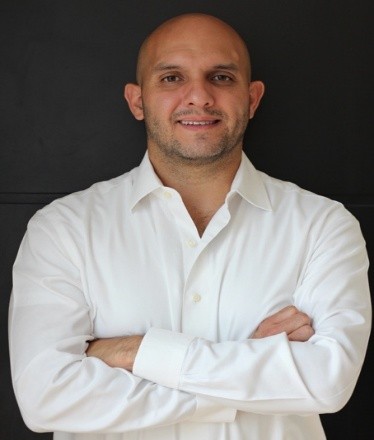
Manuel Lira holds two master’s degrees (Development Strategies & Technologies, and Tax Law). He is Founder of IdeaDuctus SC, supports industrial audit at the European Space Agency, and serves as an EU Climate Pact Ambassador for Spain. With international experience in finance, economic and regulatory policy, he is committed to sustainable growth and has lived in several countries across Europe and the Americas.

Fairer society
We are passionate about working with researchers globally to deliver a fairer, more inclusive society. This perhaps has never been more important than in today’s divided world.
Share this content