

Should billionaires exist? - Tawana Kupe
19th September 2025
Share this content


Author: Tawana Kupe, Independent Researcher and Higher Education Adviser
The issue is not the existence of billionaires per se, or those who are extremely rich, it is the political, economic, and social systems that creates them and allows them to do as they wish with their accumulated wealth. An economic system that breeds inequality distorts public policy through the effect money has in ways that undermine the public good. The influence of money in politics undermines democratic politics by creating a class of people who essentially have more than one vote. Not to mention swaying voters into making choices that have been steered by money in ways that are not obvious to the voting public.
While it is true that some billionaires advance the public interest through good natured philanthropy this choice is theirs to make. Nothing compels them to contribute to good causes. Philanthropy brings benefits to the billionaire that are not available to everyone. It can also be a way of whitewashing reputations sullied by bad ways of making a lot of money. Even when philanthropists fund causes that seek to contribute to a better society, they might choose to do so for some time and not long enough to achieve sustainable outcomes. They can also choose to change the causes they support and leave those who have relied upon them without the means to continue. Philanthropists can choose not to respond to societal needs and make other decisions that advance partisan ideological causes that do not contribute to creating a good society for all.
A system needs to be created that strikes a balance between people benefiting from the business acumen, entrepreneurial ability, and innovation on the one hand and accumulating so much wealth that it creates myriad forms of inequality on the other. Forms of taxation should be an instrument used not as a punishment for doing legitimate business in an ethical way but rather contributing to public coffers proportionate to one’s income and wealth. In such a system, those who become billionaires or extraordinarily rich will be subject to public regulation. For example, limiting how they use their money in the political, media, and public policy spaces. Such forms of taxation and regulation should be proactive, comprehensive, and enjoy societal legitimacy to ensure that this is not about hatred or envy of the rich who have made their money legitimately and contribute economically to society. An outcome of these measures could be fewer billionaires whose existence is benign to the public good.
However, a fairer system like this is not possible when political representatives and governments are disproportionally drawn from among the rich or are in office through the financial support of billionaires and the extraordinarily rich. The democratic rights of anyone to be a political representative should not be unduly curtailed, including billionaires, but to be truly representative a political system should be determined by votes and not skewed by money that buys influence. Finally, it is important also that the media and communications space has a strong publicly owned presence. It needs to be independent of commercial revenues to counter the influence of privately owned commercially driven media, some of which is owned by billionaires.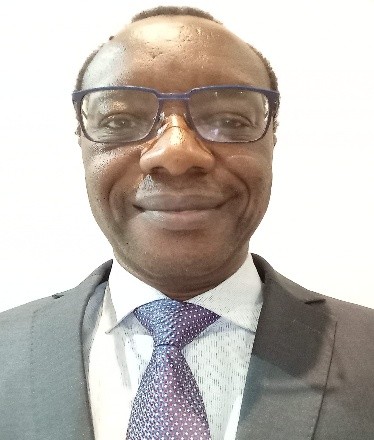
Professor Tawana Kupe is an independent researcher and Higher Education Adviser and the former Vice-Chancellor and Principal of the University of Pretoria. He served in multiple roles including as Head of Department, Head of School, Executive Dean, Deputy Vice Chancellor, and Vice Principal at Wits University in South Africa. Professor Kupe is the Editor of ‘Higher Education and the Sustainable Development Goals: SDG 4 Quality Education’ for Emerald Publishing Limited.

Fairer society
We are passionate about working with researchers globally to deliver a fairer, more inclusive society. This perhaps has never been more important than in today’s divided world.
Share this content