

Should billionaires exist? - Twaambo Mudenda
21st August 2025
Share this content


Author: Twaambo Mudenda, Managing Director of Robotix Institute and Co-founder of TessaPay, Mandela Washington Fellow
This blog was inspired by a dialogue session delivered by Dr. Wendy Purcell during the Mandela Washington Fellowship program held at Rutgers University, a program I was honored to be selected for. Our class, made up of high-achieving professionals from across the African continent, was immediately divided by the question “Should billionaires exist?” Everyone had a stake in the conversation and the debate was lively. Some defended the existence of billionaires with conviction; others, like me, saw their existence as emblematic of deeper structural failures in our societies. Let’s break it down.
Several classmates in favor of billionaires began their arguments with some variation of: “I want to be a billionaire, so they should exist.” I don't have a problem with ambition. In fact, I encourage it. But what I do find problematic is our collective struggle to hold up a mirror of honesty to ourselves. In my view, if you truly aspire to become a billionaire, then you must also be honest enough to admit that in the current global system, reaching that level of wealth often means cutting corners, legally, ethically, or perhaps both. That might mean underpaying workers, sidestepping taxes through loopholes, or leveraging political ties for preferential treatment. And that’s the part too many are unwilling to say out loud.
This isn’t a theoretical or academic argument for me. As someone from a continent that continues to bear the scars of colonial extraction, corrupt governance, and concentrated wealth, I find it difficult to celebrate billionaires without interrogating how they became billionaires. Africa is a living case study of what happens when unchecked greed, crony capitalism, and public looting are allowed to thrive. We’ve seen it with oil, with minerals, with foreign aid, and with public contracts. We know firsthand the cost of economic injustice and who pays the price. We, the people. This however isn’t unique to Africa. This is the case all around the world.
Proponents of billionaires often point to their philanthropy as justification for their wealth. Many in our class did just that. Yes, billionaires do give. But most of their giving is funneled through their own foundations, which are vehicles that allow them to maintain control over the money while managing exposure to taxes. They’re not giving it away so much as reallocating it in ways that still serve their personal interests. Philanthropy perhaps becomes a shield, allowing them to shape public opinion, steer public discourse, and even influence government policy, all without the accountability that comes with democratic decision-making.
Our global socio-economic history and present demand that we think critically: billionaires don’t exist in a vacuum. They are created by systems that favour the few over the many, allow for monopolistic control, and permit deep political entanglement. Would most billionaires exist if they followed every tax law, paid their workers fairly, refrained from lobbying for regulatory loopholes, and truly contributed their fair share to society? The answer is likely “NO”.
Even when wealth is inherited, we must ask; where did it come from? Take Elon Musk, for example. Much of his family’s early wealth came from apartheid-era South Africa, a regime built on racial inequality and economic exploitation. How ‘clean’ can such seed capital ever be? Since then, Elon has mastered the art of tax avoidance while being lauded as a genius entrepreneur. Isn’t that ironic. This is the case with many billionaires around the world. Their stories, when looked at honestly, are less about fair play and innovation and more about playing the system better than anyone else. And when they finally ‘give back’, we need to ask “Who did they take from in the first place?”
So, should billionaires exist? No. Not in a just and equitable world. Not in a world where billions still live without clean water, education, or healthcare. Not in societies where wealth is hoarded by a few while entire communities crumble. This is not about jealousy or demonising the rich. It is about asking deeper question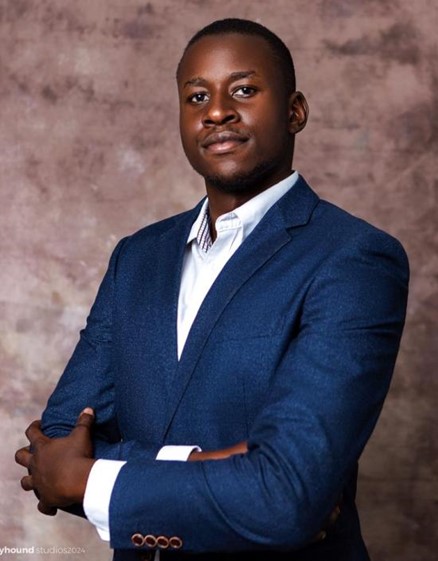 s about the systems we participate in and the people we idolise. Maybe it's time we stop admiring billionaires and start asking why we need them in the first place.
Twaambo Mudenda is a Zambian engineer and entrepreneur driving digital inclusion through robotics education and fintech innovation. As Managing Director of Robotix Institute and Co-founder of TessaPay, he empowers underserved communities, reshaping how Zambians access technology, education, and financial services to build a more inclusive digital future.
References
[1] The Mandela Washington Fellowship for Young African Leaders is the flagship program of the U.S. Government’s Young African Leaders Initiative (YALI). Established in 2014, the Fellowship has brought nearly 7,200 young leaders from every country in Sub-Saharan Africa to the United States for academic and leadership training. The Fellows, between the ages of 25 and 35, are accomplished innovators and leaders in their communities and countries. Accessed online 22 July 2025.

Fairer society
We are passionate about working with researchers globally to deliver a fairer, more inclusive society. This perhaps has never been more important than in today’s divided world.
Share this content