

Voices against censorship to defend research: In conversation with Lisa Schiff and Alice Meadows
19th May 2025
Share this content


Authors: Lisa Schiff, Associate Director for the Publishing, Archives, and Digitization Group at the California Digital Library at the University of California, USA, and Alice Meadows, a co-founder of the MoreBrains Cooperative.
Emerald Publishing has been working closely with the team behind the Declaration to #DefendResearch, supporting their efforts to stop the censorship of and restrictions on academic research.
We recently had an opportunity to sit down with Lisa Schiff and Alice Meadows, two of the organisers of the Declaration, to ask them more about their work and what individuals and organisations can do to support these efforts.
How are you measuring the impact of the Declaration and your broader campaign?
When we first released the Declaration, we had no idea if it would resonate with anyone else or if it would achieve our primary goals - raising the awareness of the U.S. government’s actions to censor research and researchers and providing a shared public space for individuals and organisations to take a stand opposing those actions. But the response has been strong, especially considering that we are focusing on something very specific that could easily be lost in the wash of the massive destruction this administration has unleashed, targeting everything from the rule of law to individual immigrants.
In terms of signatures, we’re closing in on 5,000, including well over 100 organisational signatories – on a par with other statements and petitions responding to the government’s attacks on higher education and research. Beyond the number of signatories, we’ve been thrilled to see others take up our message, including through Emerald’s powerful #DefendResearch campaign.
An increasing number of organisations, publishers, and journals have made statements about censorship, referencing the Declaration and/or #DefendResearch, which is another indication of impact. Finally, people are using the #DefendResearch hashtag on social media completely unprompted by us, another indicator that our effort is resonating.
Have you been able to engage directly with policymakers?
Getting our message directly to policymakers is what we are working on now, leveraging our strong foundation of signatories, as well as the articles and interviews we and others have shared about our work, and public statements by other organisations.
We are developing toolkits to make it easy for people to spread the word – we already have a script with background information for people to use when calling their elected officials, and we will soon release a second toolkit to help people to write letters to editors. After that, we have plans for a “Daily Action” campaign. And we’re also encouraging people to share their own stories about the impact of censorship. All of this is designed to get the attention of elected officials and other individuals with decision-making power.
What advice do you have for those who want to speak up against censorship but are concerned about repercussions (personal, professional)? Are there ways that they can support the campaign?
First, don’t immediately self-censor. We all have different vulnerabilities, so we each need to assess those risks for ourselves and recognise that, while we all may be dismayed, some of us have more protection than others.
Whatever limits we have, the times are calling for us to do the most we can within those limits:
- If you have work restrictions, like most of the Declaration team, you can still act in your capacity as a private citizen. Consider whether making it clear that you are speaking for yourself as an individual, and not an employee, is sufficient for you to post on social media, attend rallies, write letters, etc. So far, at least, we still have First Amendment rights, though it’s likely that we will have to fight to protect those as well.
- If you’re in the U.S., you can make the important commitment to regularly contact your elected officials by phone or through email/message forms. These are private exchanges, so they won’t conflate your personal and professional identities or raise your profile publicly. Our senators and representatives need to hear from us that censorship is unacceptable and that we expect and need them to intervene.
- And don’t underestimate the importance of talking with the people in your life. Share your thoughts and concerns with your friends, neighbours, and family. Tell them why censorship is so harmful and invite them to join you in trying to end it.
The U.S. is the primary focus of the declaration, but we know you have received support from individuals and organisations in many countries. Why is it important for those outside the U.S. to sign the declaration and join in your campaign?
Scholars from around the world have reminded us that the U.S. is not the first government to impose censorship, so when individuals and organisations from outside our country sign the Declaration, they are speaking from a deep place of experience, knowledge, and concern. Their support is heartening but, more importantly, it underscores how serious this situation is.
It is also a recognition that research is a global endeavour and knowledge is a global public good. What happens in one country can have significant ramifications for people everywhere; that is certainly the case with the U.S., given its hegemonic presence in the globe.
The impact on non-U.S. scholars has already been quite direct, for example, in terms of the loss of funding for collaborative research when specific areas of inquiry are no longer allowed. In addition, individual researchers have been denied entry to the U.S. based on statements they have made, an increasing number are afraid to cross our borders, and those receiving U.S. funding are being required to affirm that their work complies with the Trump Administration’s censorship acts. In short, while arguably the political situation in the United States is one of our own making and thus our responsibility to address, the effects will be felt far and wide.
About the authors
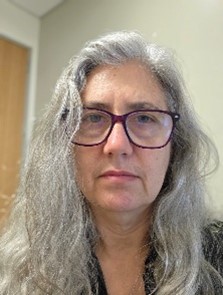 Lisa Schiff is the Associate Director for the Publishing, Archives, and Digitization Group at the California Digital Library at the University of California, USA. As a private citizen, she co-authored the Declaration to #DefendResearch Against U.S. Government Censorship. The thoughts and perspectives shared here reflect her own views and are not meant to represent those of her institution.
 Alice Meadows is a co-founder of the MoreBrains Cooperative, a consulting organisation that specialises in – and supports the values of – open research. Like Lisa, Alice is writing in a personal capacity, and the views expressed here are her own.
Emerald Publishing became the first organisation to sign the #DefendResearch declaration. We believe we can stand together as a global community to successfully resist censorship, promote open dialogue, and ensure that academic freedom remains a cornerstone of scholarly communication.
Join us and thousands more.
Share this content