

Lindsey Basileo and Merewyn Lyons discuss the benefits of publishing open access journal
7th February 2025
Share this content


Author: Dr. Lindsey Devers Basileo and Dr. Merewyn E. Lyons
Article: An exploratory analysis of Early Adopters in education innovations
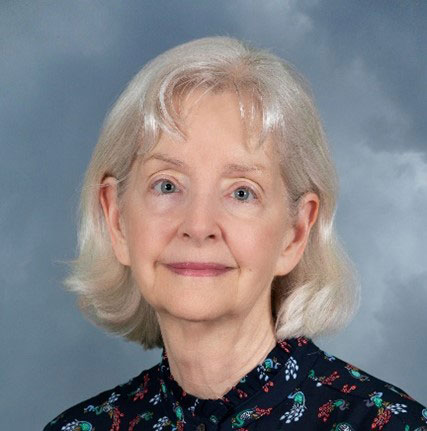
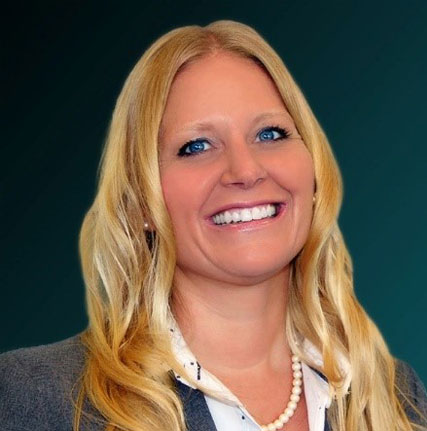
In this interview, Dr. Lindsey Devers Basileo and Dr. Merewyn E. Lyons discuss their research, what led them to submit to Quality Education for All and the benefits of publishing open access.
In summary, what is your research about? Why does this research matter, and what impact could this research have?
To understand our research priorities, it is important to understand why our organisation, Instructional Empowerment, exists. Our social mission is to end generational poverty and eliminate racial and socioeconomic achievement gaps. The key to achieving this mission is developing student agency. As Amartya Sen noted in his book, Development as Freedom, agency allows people to lead a life free of the deprivations of poverty and to contribute to the improvement of society and the functioning of democracy.
We believe we can achieve our mission through redesigned rigorous instruction that creates a safe and supportive classroom culture of deeper learning, elicits students’ intrinsic motivation, builds their cognitive, interpersonal, and intrapersonal skills, and provides opportunities for students to exercise greater autonomy and agency as members of community of learners.
At our Applied Research Center, we are researching a model of instruction designed to provide deeper learning opportunities for all students. It requires a shift from teacher-centered instruction to student-led team learning that builds student agency. We have discovered that making this shift in schools requires a high degree of innovativeness in both teachers and school leaders. Our studies are examining ways to foster and leverage educator innovativeness to expand implementation of the model of instruction.
What led you to submit to this journal? (Especially with it being new, no rankings, etc.)
We felt that our article was suited to the aims and scope of Quality Education for All and were intrigued by the broad range of topics that the journal covers. We were also excited to contribute to the launch of this new journal.
How important was publishing Open Access for you?
Open Access is essential to ensure that educators can find and read our research.
How did you find out the journal?
We were first attracted by Emerald’s goal to help researchers and practitioners work together to make a positive change in the real world. This is well-aligned to our mission. When we found Quality Education for All, it looked like a perfect match.
Have you seen any benefit from publishing OA, especially with the amount of downloads your article has received?
We are happy that so many people are interested in the study, and that researchers are referencing it. We hope this introduces our applied research findings to a broader audience and opens the door to new research collaborations.
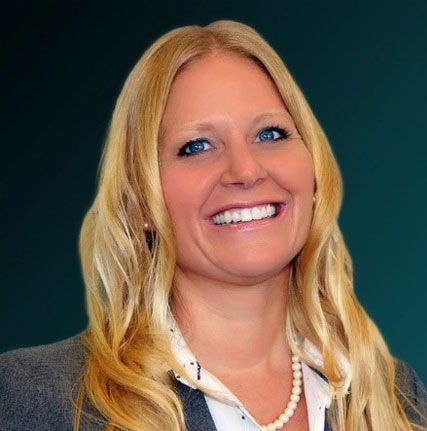
Dr. Lindsey Devers Basileo is the Director of Research at the Applied Research Center of Instructional Empowerment.
She earned her doctorate from Florida State University in 2010 and is a nationally certified reviewer for the What Works Clearinghouse, specialising in Group Design Standards (Version 4.0 and 4.1). Her research interests include school improvement, educational innovations, self-determination theory, Diffusion of Innovation theory, Group Design standards, survey design and collection, and both quantitative and qualitative research methods. She is a member of the American Educational Research Association.
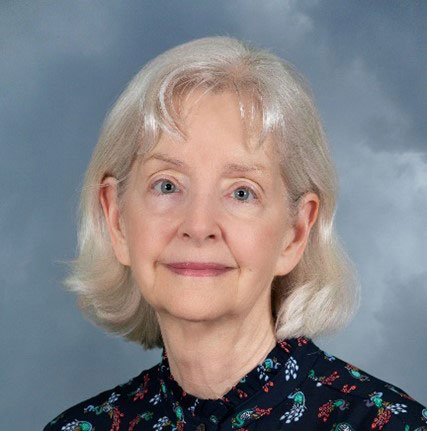
Dr. Merewyn E. Lyons is a Senior Research Analyst with the Applied Research Center of Instructional Empowerment.
Her primary research interest is educational psychology, with a focus on deeper learning and understanding the effect of motivation on teaching, learning, and educational leadership. She is a member of the Center for Self-Determination Theory, the American Educational Research Association, and European Association for Research on Learning and Instruction.

Quality education for all
We believe in quality education for everyone, everywhere and by highlighting the issue and working with experts in the field, we can start to find ways we can all be part of the solution.
Share this content